
The Legacy Giving Rethink, Part 1
March 26, 2026
The Legacy Giving Rethink, Part 1: Why Most Programmes Fail Before They Start
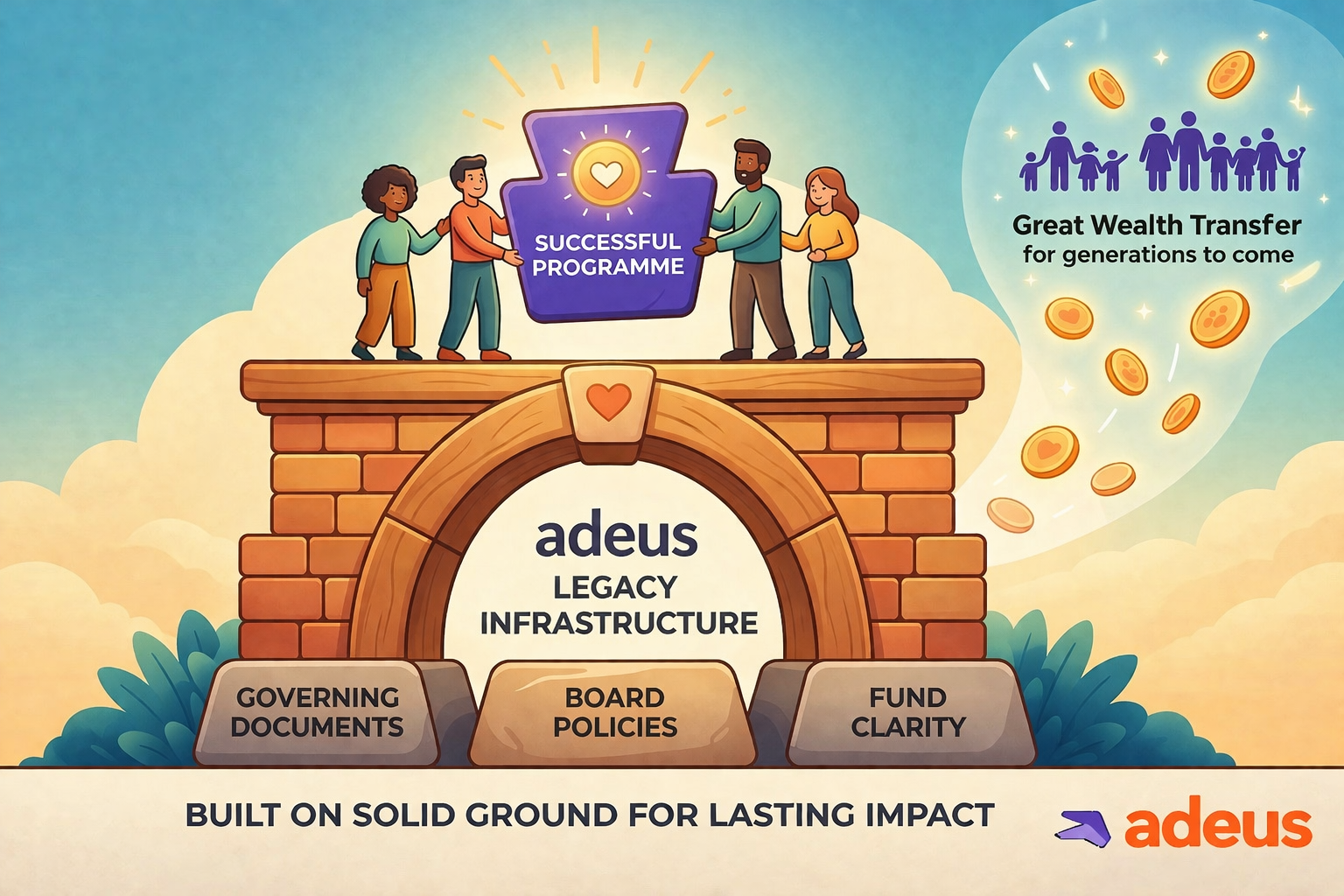
Legacy income in the UK has quadrupled since 1994, rising from £1 billion to £4.5 billion annually. With an estimated £5.5 trillion set to pass between generations over the next thirty years, the “Great Wealth Transfer” is no longer a future concept. It is a current reality.
The organisations positioned to benefit from that transfer will look back on the decisions they made this decade as some of the most consequential in their history. Most organisations are not currently positioned to benefit. The reason is almost always the same: they launch their legacy programme before they have built the internal infrastructure to sustain one.
Legacy giving is an infrastructure decision, not a fundraising tactic
The most common mistake is treating legacy giving as just another channel. It gets activated when annual giving plateaus or when a board member raises it at a strategy day. A brochure is designed, a landing page goes live, and six months later the momentum quietly vanishes.
The organisations that build genuinely successful legacy programmes understand from the start that this is a structural commitment, one that requires governance, legal readiness, andinternal alignment before a single donor is ever approached. Skipping that foundation is why most programmes stall before they gain any meaningful traction.
The groundwork that makes everything else possible
Before any public communication goes out, three things need to be in place.
Your governing documents need to explicitly confirm that your organisation can accept the types of gifts you intend to promote. Bequests, property, and restricted funds all carry differentl egal implications, and assuming your current documents cover them is a risk not worth taking.
Your board needs to have formally approved a gift acceptance policy. This sets out what you will and will not accept, how estate gifts will be valued, and what your financial oversight process looks like. A legacy donor is making a decision they cannot reverse once they are gone. Any ambiguity about how your organisation will handle their gift will cost you their trust, and potentially the gift itself.
You need absolute clarity about where legacy funds will go. An endowment, a named fund, a specific programme or capital project. Each answer creates a fundamentally different conversation with a donor. Leaving it vague does not give you flexibility. It signals that you have not thought it through, and donors notice.
A solicitor and an accountant should be involved before anything goes public. Board sign-off is not just a formality. It is the legal and reputational foundation the programme depends on.
Start simple and expand from there
Launching with overly complex gift vehicles is one of the most reliable ways to derail a new programme. Charitable remainder trusts and property gifts have their place, but they require administrative capacity and legal sophistication that most organisations simply do not have at the outset.
Start with three straightforward gift types. A residuary gift, where a donor leaves a percentage of their estate after all other bequests are fulfilled, is inflation-proof and typically the most valuable gift type an organisation will receive over time. A pecuniary gift is a fixed sum of money left in a will, simple to promote and simple to receive. A specific gift is a named asset, whether shares, a piece of artwork,or another item of value, that a donor chooses to leave directly to your organisation. Between them, these three options cover the vast majority of what donors will actually want to do. Everything else can be added later once the infrastructure exists to handle it properly.
The internal document nobody writes
Before going public, produce an internal legacy strategy document. This is not for donors. It is for your board, your leadership team, and anyone who might be asked about the programme.
It needs to answer three questions: why are you introducing legacy giving now, where will the funds go, and what is your case for support? Without it, institutional knowledge lives in one person's head and the programme rarely survives a leadership change.
Legacy giving is not a sprint. The gap between a donor making a commitment and an organisation realising the gift is measured in years, often decades. The programmes that survive that distance are the ones built on solid ground from the very beginning.
Next in our series
In Part 2, we cover the part most organisations find hardest: the messaging and relationships that turn a one-time intention into a lasting commitment.
Contributed by Jonathan Ng
As Head of Partnerships at adeus, Jonathan works with schools and other institutions to build and grow legacy giving programmes through a modern, digital-first approach. He leads partner relationships from early conversations through to campaign launch, helping organisations shape the right strategy, messaging, and supporter journey. Outside of work, he is a dad, which gives him a personal appreciation for legacy, family, and planning for the future.
___
About our legacy giving programme
adeus helps independent schools, charities and foundations build legacy programmes on solid foundations. We provide supporters with online will writing, funded by the organisation, with no obligation to leave a gift. Where a supporter chooses to, that gift becomes legacy income for bursaries, capital projects and long-term mission. Few providers offer this. To find out more, email talktome@adeus.life.


